Table of Contents
Welcome to Intelligence Augmentation.
Everyone is using AI, but using it wrong! I had to use this cliché at least once.
Intro
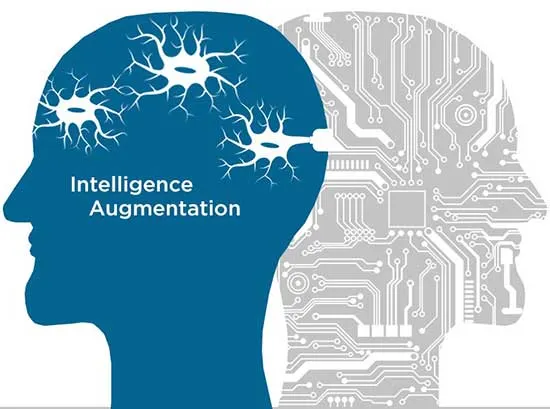
With the adoption of Artificial Intelligence, different groups have attempted to examine the impact of AI dependence on the human brain. The grim research conducted by various entities, including Microsoft and MIT, has shown that while Artificial intelligence is convenient for different tasks, it is not improving our brains but rather thwarting their growth. Therefore, my first statement! Image from Engineers Garage
When AI was being conceptualized and researched, similar to other technologies, the idea was for it to augment human knowledge and intelligence, helping us achieve more. Unfortunately, while we can do more (to some extent), AI is not augmenting human intelligence; instead, as things stand, we are developing it to replace our intelligence. To use the fish metaphor, AI is giving us the fish rather than teaching us how to fish, and as the metaphor goes, this is the wrong approach. I would go further to paraphrase one of my favorite authors, Yuval Harari, in a WSJ interview, where he mentions that, unlike previous inventions, which were mainly tools, AI and AI agents are not tools since they do not necessarily require human input to take actions or operate. If we compare an AI agent to a computer, a computer is a tool we use to perform various tasks; an AI agent is developed to replace human input in performing some tasks.
We are still advancing these agents, and soon, the majority of tasks will no longer require human intervention to program them or determine their actions. Soon, we will have agents that can develop agents to perform various tasks. Companies such as Microsoft are already developing and researching such agents, e.g., Autogen, as well as meta-agents. However, we do not yet have general-purpose, recursively self-improving agents, but research is already underway.
MIT study: Cognitive decline with AI use
MIT conducted a study titled “Your brain on ChatGPT,” which involved 54 participants who were aged between 198 and 39. The participants were divided into three groups: one group used native Google search, another used ChatGPT, and the third relied solely on their knowledge. Over the four-month study period, participants were asked to write essays while their brain activity was monitored. The findings revealed that the ChatGPT groups showed the lowest brain engagement, reduced creativity, and diminished memory recall (have you experienced this?). The ChatGPT groups also copied and pasted the AI-generated content with minimal editing, which shows reduced cognitive effort. The study reveals and introduces the concept of metacognitive laziness resulting from overreliance on AI. This overreliance leads to a reduction in critical thinking and harms learning. In short, overreliance on AI tools such as ChatGPT may diminish our cognitive abilities and hinder the development of independent thinking skills.
Microsoft study: GenAI Impact on critical thinking
A Microsoft study, conducted in conjunction with Carnegie Mellon University, found that among 319 knowledge workers assessed, a higher level of confidence in AI tools was correlated with reduced critical thinking efforts. On the other hand, a higher confidence in one’s abilities was associated with increased critical thinking. The participants reported that using AI changed their focus from solving the problem to simply verifying AI-generated responses, resulting in a decrease in their independent analytical skills. This study also highlights the risk of long-term reliance and diminished independent problem-solving due to overdependence on AI.
Intelligence Augmentation (IA)
The two studies above emphasize the need for AI tools that support and enhance critical thinking rather than replace it. This calls for intelligence augmentation (IA).
Intelligence Augmentation aims to enhance rather than replace human cognition. When applied thoughtfully, it could mitigate the cognitive and creative erosions identified by both studies.
Using our fish metaphor, IA does not give you the fish or teach you how to fish, but it sharpens your instincts about where to cast your line, helps you track what bait works best, and lets you focus on refining your technique.
If implemented well, IA can preserve and enhance human cognitive strengths, especially now that we can use AI as a tool rather than a replacement. It could remove the learned helplessness and creativity complacency, which is cropping up and is likely soon to take us to the idiocracy nightmare.
How can it help?
IA preserves humans as the driver by keeping them involved in decision making, ensuring the brain does not atrophy from disuse and overreliance on artificial intelligence. At its core, Intelligence augmentation places humans as the central and active agents in the task, rather than as peripheral and passive entities.
IA fosters extension, not replacement, where it treats tools as an extension of thought rather than as surrogates. IA encourages habits of externalized reflection, structured inquiry, and critical dialogue, where the augmentation serves the thinker and not the other way around. It’s about removing the black box notion where users unthinkingly follow and trust outputs because it’s easier.
IA fosters curiosity and skepticism, the foundation of learning. It forces us to be curious and ask questions rather than accepting what is generated by AI as the primary truth. In so doing, IA calls for a complementary rather than a superiority approach to using tools like AI.
With IA, the primary objective will be human growth. The goal, therefore, changes from cognitive development to not simply task completion. This aligns with educational and developmental theories, which encourage humans to learn and evolve.
Yuval Harari mentions that AI (Artificial Intelligence) is an entity that is part of the evolution, which makes sense if you think about it. AI is an intelligent entity that has been built and with poor use and governance could easily replace the homo sapiens. IA upholds ethical coevolution, where the goal is a symbiotic, and not parasitic, relationship. It pushes for collaboration, not dependency. In so doing, we avoid a future where humans are deskilled en masse and locked into mental passivity.
Conclusion
Intelligence augmentation calls for people to do more with the tools available; it’s about thinking more effectively with additional tools, rather than outsourcing the thinking itself. If applied effectively, IA could help counteract the AI-induced deskilling and preserve human intelligence, creativity, and autonomy in the long run. Human intelligence may be needed somewhere in the future, if not today.